
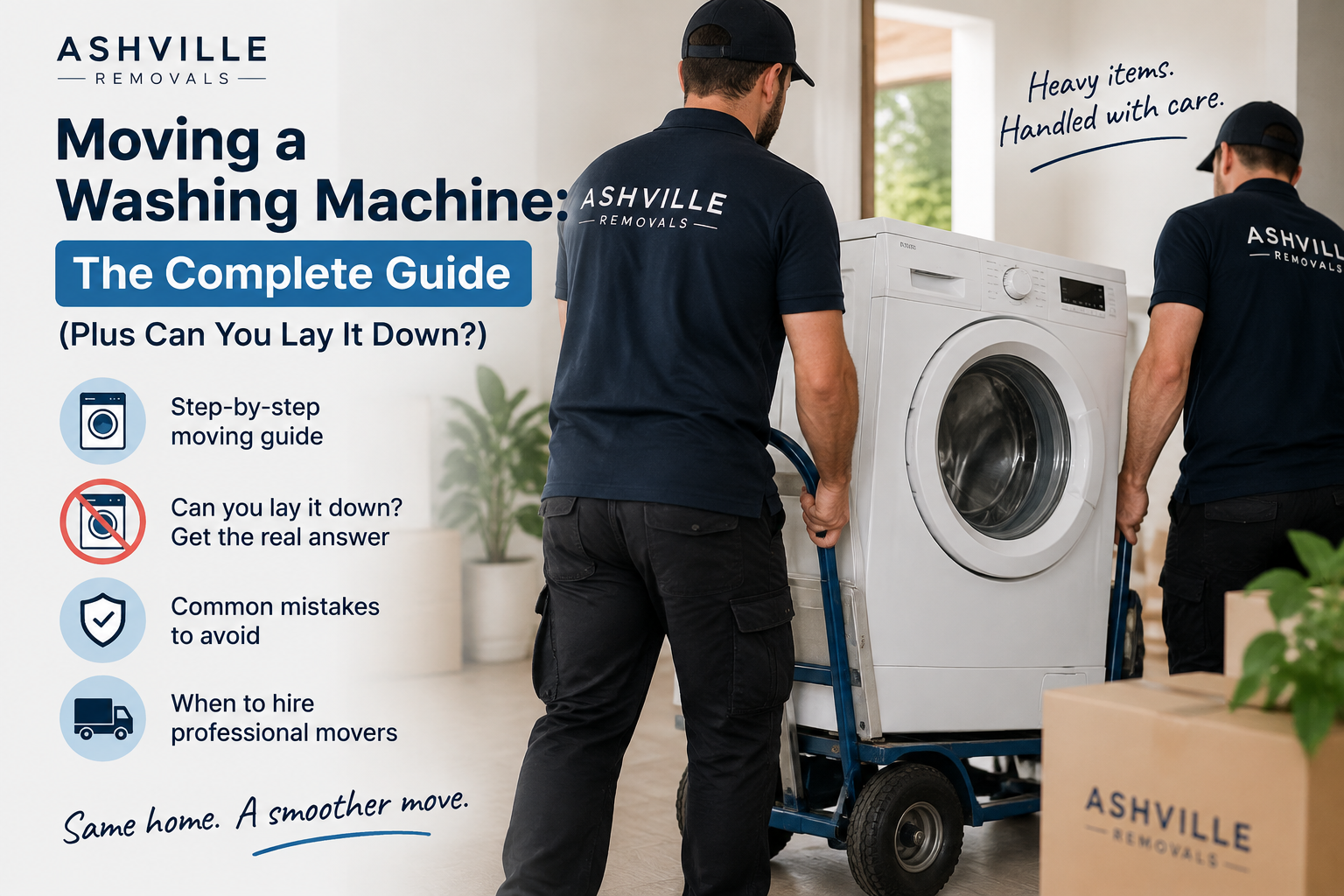
A washing machine is one of the heaviest, most awkward, and most expensive-to-replace appliances in your home—which makes moving a washing machine one of the trickiest parts of any house move. Most machines weigh 60–90 kg, are top-heavy, and contain a suspended drum that can be seriously damaged if handled the wrong way.
If you’re searching for how to move a washer, wondering if you can lay down a washing machine, or just want to make sure moving a washer from your old place to your new one doesn’t end with a repair bill, this guide covers everything you need to know.
If you’d rather skip the heavy lifting altogether, our team at Ashville Removals handles heavy item removals across Melbourne, including washing machines, fridges, and other awkward white goods—with the right equipment and insurance to back it up.
Can You Lay a Washing Machine Down When Moving It?
This is the question almost everyone asks, and the short answer is no, you shouldn’t lay a washing machine down if you can avoid it.
Can you lay washing machines down safely? Not really—most front-loading and top-loading machines have a suspended drum held by springs or shock absorbers. Tilting or laying the machine on its side can cause:
- Oil or fluid inside the drum’s shock absorbers leaking into places it shouldn’t
- The drum to shift and knock against the outer casing, causing dents or misalignment
- Damage to internal hoses, wiring, and the motor mount
So, can you lay a washing machine down in an emergency—say, it won’t fit upright through a doorway? If there’s truly no other option, lay it on its side (never the front or back), keep it flat for the shortest time possible, and let it sit upright for at least 24 hours before plugging it in again. But as a rule, keep it standing upright throughout the entire move.
How to Move a Washing Machine, Step by Step
Here’s exactly how to move washing machine appliances the right way, whether you’re doing it yourself or prepping for professional movers.
1. Disconnect and Drain It First
Unplug the machine and turn off the water supply. Disconnect the inlet hoses and let any remaining water drain into a towel or shallow tray—leftover water left inside is one of the most common causes of leaks and floor damage during a move.
2. Fit the Transit Bolts
Most washing machines come with transit bolts that lock the drum in place for transport. If you still have them, now’s the time to refit them into the holes at the back of the machine. No transit bolts? Wedge foam or thick towels around the drum through the door to limit movement, though genuine transit bolts are always the safer option.
3. Secure the Door and Cords
Tape the door shut (painter’s tape works well and won’t leave residue) and secure the power cord and hoses with cable ties so nothing drags or gets caught while moving.
4. Use a Proper Appliance Dolly
Given the weight involved, a washing machine should never be lifted by hand for more than a short distance. An appliance dolly with straps keeps the machine upright and stable, and a stair-climbing dolly makes a huge difference if you’ve got steps to navigate.
5. Keep It Upright in the Truck
Load the machine upright and strap it securely against the truck wall so it can’t shift or tip during transport. Padding blankets around the corners helps prevent dents and scratches.
6. Let It Settle Before Use
Once it’s in your new laundry, leave the washing machine standing for a few hours (24 hours if it was tilted at any point) before reconnecting and running a cycle. This lets any oil or fluid inside settle back into place.
Common Mistakes to Avoid
- Skipping the drain step—even a small amount of trapped water can leak onto floorboards or carpet in transit.
- Moving it alone—at 60-90 kg, this is a two-person job at minimum.
- Forgetting the transit bolts—this is the single biggest cause of drum damage during a move.
- Rushing on stairs—take it slow, use a spotter, and never let the machine’s full weight rest on one person.
- Lifting instead of rolling—a dolly protects both your back and the machine.
Should You Hire Professional Movers for a Washing Machine?
Given the weight, the risk of injury, and the cost of repairing a damaged drum or motor, many people choose to leave it to professionals rather than risk moving a washer themselves. If you’re already booking movers for furniture removals or a full home move, it’s worth confirming your removalist is equipped to handle heavy appliances specifically—proper straps, dollies, and experience with white goods make a real difference.
Ashville Removals’ heavy item movers team handles washing machines, fridges, and other bulky appliances as part of our standard local removalist services across Melbourne—fully insured, so you’re covered even if something unexpected happens on the day. Check our pricing guide for a realistic idea of costs, or get in touch for a free quote.
Frequently Asked Questions
1. Can you lay down a washing machine when transporting it?
It’s best avoided. Laying a washing machine down can cause internal fluid to leak and the drum to shift, potentially damaging the motor or suspension. If unavoidable, lay it on its side (not front or back) for the shortest time possible, and let it stand upright for 24 hours before use.
2. How do you move a washing machine without transit bolts?
If you no longer have the original transit bolts, pack towels or foam tightly around the drum through the door opening to restrict movement, and keep the machine upright and well-strapped throughout the move. Some manufacturers sell replacement transit bolt kits if you want the safest option.
3. Do you need two people to move a washing machine?
Yes—a washing machine typically weighs 60–90 kg and is awkward to balance. It’s a two-person job at minimum, and a proper appliance dolly makes it significantly safer and easier to manage, especially on stairs.
4. How long should a washing machine sit before you use it after moving?
Give it at least a few hours upright, and up to 24 hours if it was tilted or laid down at any point during the move. This allows any internal fluid to resettle before you run it.
5. What happens if you don’t drain a washing machine before moving it?
Leftover water can leak out during transport, potentially damaging your floors, other belongings, or the inside of the moving truck. It also adds unnecessary weight, making the machine harder and riskier to carry.
Need a hand moving your washing machine or other heavy appliances? Get a free quote from Ashville Removals and let Melbourne’s experienced removalists handle the heavy lifting safely.