
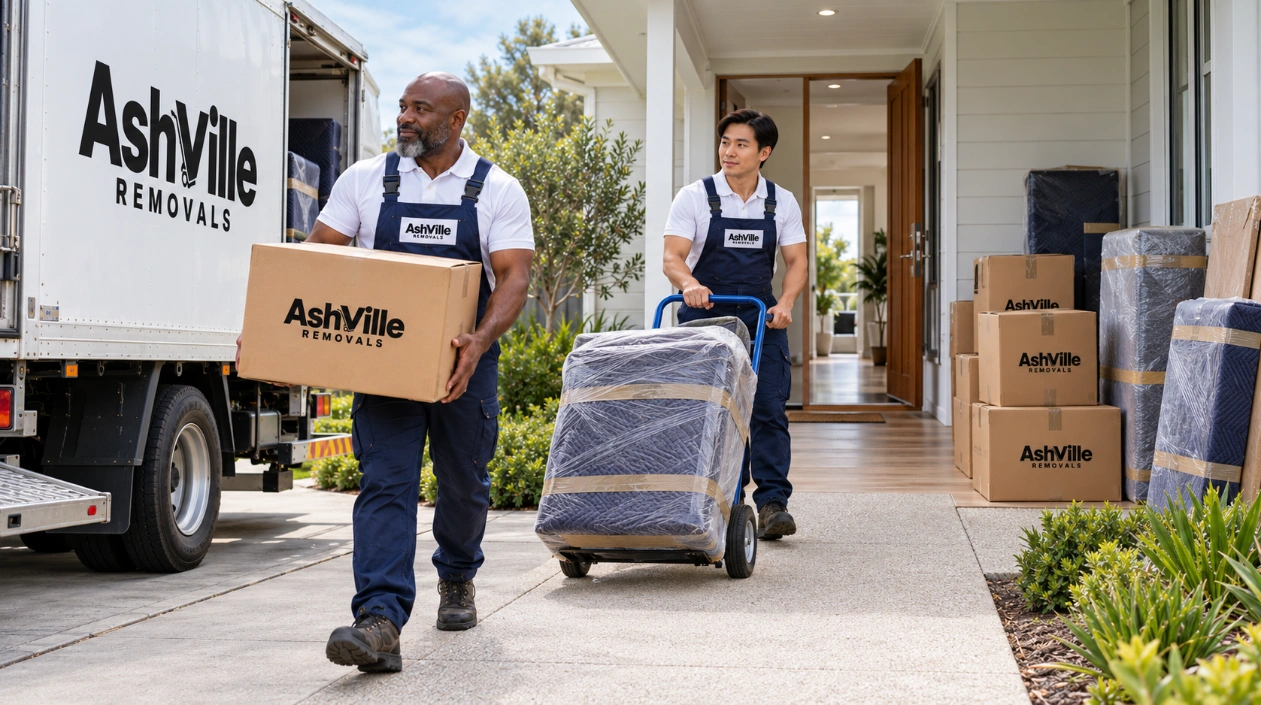
Here’s something most people don’t realize until the invoice arrives: on an hourly booking, the crew’s speed is only half the equation. The other half is how ready your home is when they walk through the door.
Two identical three-bedroom homes in the same street, with the same inventory and the same crew, can take four hours or six and a half. The difference is almost never the removalists. It’s whether the boxes were sealed, whether the truck could park close, and whether someone spent the first hour deciding what was coming and what wasn’t.
That two-and-a-half-hour gap is real money. This guide covers exactly how to prepare for removalists so your move runs at the fast end of that range.
What Should I Do Before the Removalists Arrive?
The short version: every box sealed and labelled by room, furniture emptied and disassembled where needed, a clear path from every room to the front door, parking reserved directly outside, pets and children out of the house, and one person available to answer questions for the full duration.
Get those six things right, and you’ve done more for your bill than any negotiation over an hourly rate.
Do Removalists Expect You to Be Packed?
Yes—unless you’ve specifically booked a packing service.
A standard removalist booking covers loading, transport, and unloading. It assumes your belongings are already in sealed cartons when the truck arrives. Furniture, appliances, and mattresses are the crew’s job. Loose contents are yours.
If the crew arrives to half-packed rooms, they will help—but they’ll do it on your hourly rate, without the right materials for your fragile items, and while the truck sits idle. That’s the most expensive possible way to finish your packing.
If you know you won’t be ready, book a packing service upfront instead. It’s cheaper than improvising on the day, and a trained two-person crew packs a three-bedroom house in around five to six hours—roughly a third of the time it takes one person working alone. Our ultimate packing guide for moving house in Australia walks through the full method if you’re doing it yourself.
Four Weeks Out: The Groundwork
Declutter before you pack, not after. Every item you donate, sell, or dispose of is an item you don’t pay to move. This is the single highest-return task in the entire process, and it only works if you do it early—decluttering on moving day just becomes standing in the hallway making decisions while a truck waits.
Book your removalist. For weekend and month-end dates in Melbourne, three to four weeks ahead is the realistic window. Mid-month weekdays are more flexible and also cheaper—see our comparison of the cheapest day to move house in Melbourne.
Tell your removalist about the difficult items now. Pianos, safes, pool tables, oversized fridges, gym equipment, and full-height bookcases all change the crew size and equipment allocation. Flagging a piano at the quote stage means the right dolly and stair-climbing gear arrive on the truck. Flagging it on the morning means a problem. We handle these through our piano movers and heavy item movers services.
Sort access and permits. If you’re in an apartment building, apply for your goods lift booking and loading dock slot now. If you’re on a metered or clearway street in the City of Melbourne, Yarra, Port Phillip, or Stonnington, apply for a parking dispensation permit—councils typically need around five to seven business days.
Two Weeks Out: Packing With Purpose
Pack by room, and label by destination room. Write the destination room on two sides and the top of every box. Not the contents—the room. The crew reads labels while walking, and a box labelled “Kitchen” gets carried straight to the kitchen at the new address. A box labelled “misc” gets stacked in the hallway for you to sort later.
Seal every box properly. Three strips of tape along the bottom seam, three along the top. Open-flap boxes can’t be stacked, and unstackable boxes waste truck space, which means more trips.
Keep boxes under 20 kg. Books, files, and crockery go in small cartons only. Linen and cushions go in large ones. A box the crew has to double-handle is a slow box.
Number your boxes and keep a list. Even a rough note on your phone—”1–12 kitchen, 13–20 master bedroom”—makes unpacking faster and gives you an immediate check that everything arrived.
One Week Out: The Physical Prep
Empty everything with a drawer or a door. Dressers, filing cabinets, bedside tables, desks, and wardrobes must be emptied. Full furniture is heavier than the safe lifting limit, drawers slide open on stairs, and the crew can’t wrap a piece they can’t move. This is the most common single cause of delay we see.
Disassemble what you can. Bed frames, table legs, and flat-pack shelving come apart quickly with the right tools and take up a fraction of the truck space assembled. Put every bolt and fitting in a labelled zip bag and tape it to the underside of the item it came from. Our furniture removalists can handle disassembly and reassembly if you’d rather not, but it’s charged as crew time.
Defrost the fridge and freezer. Start 24 hours before. A fridge moved without defrosting leaks through the truck and into other people’s boxes.
Prep the appliances. Disconnect the washing machine and drain the hose. Fit the transit bolts if you still have them. Empty the dishwasher.
Take down wall-mounted items. TVs, brackets, shelves, mirrors, and curtain rods. TVs in particular need proper handling—our guide on how to pack a TV and electronics for a move covers the flat-versus-upright question and what to do if you no longer have the original carton.
Photograph high-value items before wrapping. Furniture, artwork, and electronics. It takes five minutes, and it’s your record of pre-move condition.
The Night Before
Pack your essentials box and keep it with you. Kettle, mugs, phone chargers, toilet paper, hand soap, a towel each, medications, basic tools, and a change of clothes. This box does not go on the truck.
Stage everything near the exit. Stack sealed boxes in the hallway, entry, or garage—heaviest at the bottom, lighter on top, labels facing out. A crew that can load a stack in one trip rather than walking to six separate rooms saves 30–45 minutes on a typical home.
Clear the pathways. Move rugs, pot plants, bins, bikes, and shoe racks out of hallways, stairwells, and the front path. Prop open the doors that need to stay open.
Charge your phone. You’ll be reachable all day.
Moving Day Morning
Reserve the parking. This is the highest-value thing you can do on the day. Park your own car in the space the night before and move it when the truck arrives, or set up bins and cones. Every extra meter between the truck and your front door multiplies across a hundred trips. On a narrow street in Fitzroy, Carlton, or Richmond, a good park can cut an hour off the job.
Protect the floors. The crew brings floor runners and door protectors, but if it’s raining—likely in a Melbourne winter—put down old towels at the entry as well.
Be there, and be decisive. Walk the crew through the house in the first five minutes: what’s going on, what’s staying, what’s fragile, and what goes on the truck last because it’s needed first. Then stay reachable. The single biggest cause of a stalled move is a crew standing in a hallway waiting for someone to answer a question.
Get pets and small children out of the house. Doors are propped open all day, and the path is constantly in use. A friend’s place or day care for the day is safer and faster for everyone.
Do a final sweep before the truck leaves. Every cupboard, the dishwasher, the linen press, the roof cavity if you use it, the letterbox, and the garden shed. Check behind doors. Confirm the meter box, the spare keys, and the remote controls.
What Slows Melbourne Moves Down Most
From thousands of jobs across Melbourne, these are the recurring time-killers:
- Furniture still full of contents—the number one delay, every time.
- No parking near the entrance—costs 30–60 minutes on inner-city streets.
- Unbooked goods lifts in CBD, Southbank, and Docklands buildings, leaving the crew queueing behind another move.
- Half-packed rooms that turn a loading job into a packing job.
- Nobody on site to make decisions.
- Items discovered late—the shed, the roof cavity, the storage cage—that weren’t in the quote.
Frequently Asked Questions
What should I do before the removalists arrive? Seal and label every box by destination room, empty all drawers and cabinets, disassemble bed frames and table legs, clear a path from every room to the front door, reserve parking directly outside, and keep pets and children out of the house. Have one person available on site all day to answer questions.
Do removalists expect you to be packed? Yes. A standard removalist booking covers loading, transport, and unloading—it assumes all loose items are already in sealed cartons. Furniture, appliances, and mattresses are the crew’s responsibility. If you won’t be ready, book a packing service in advance rather than having the crew pack on an hourly rate.
How can I speed up my move and reduce the cost? Stage sealed boxes near the exit before the crew arrives, reserve parking as close to the door as possible, empty and disassemble furniture, and clear all walkways. Together these routinely save one to two hours on a three-bedroom move—a direct saving on any hourly booking. See our budget moving guide for more.
Should I empty my drawers before movers arrive? Yes, always. Full furniture exceeds safe lifting limits, drawers slide open on stairs and in transit, and the crew can’t wrap or strap a piece that’s too heavy to tilt. Empty every drawer, cabinet, and wardrobe before moving day.
What should I not pack for the removalists to take? Keep passports, jewelry, cash, medications, laptops, and important documents with you personally. Removalists also can’t transport flammable or hazardous goods—gas bottles, petrol, paint, and aerosols. Check what’s stored in your shed and garage well before the day.
Ready to Book?
Tell us your home size, suburb, and preferred date, and we’ll send a written, itemized quote within two hours—including a prep checklist tailored to your property’s access.
Get your free quote or call 0404 382 743.