
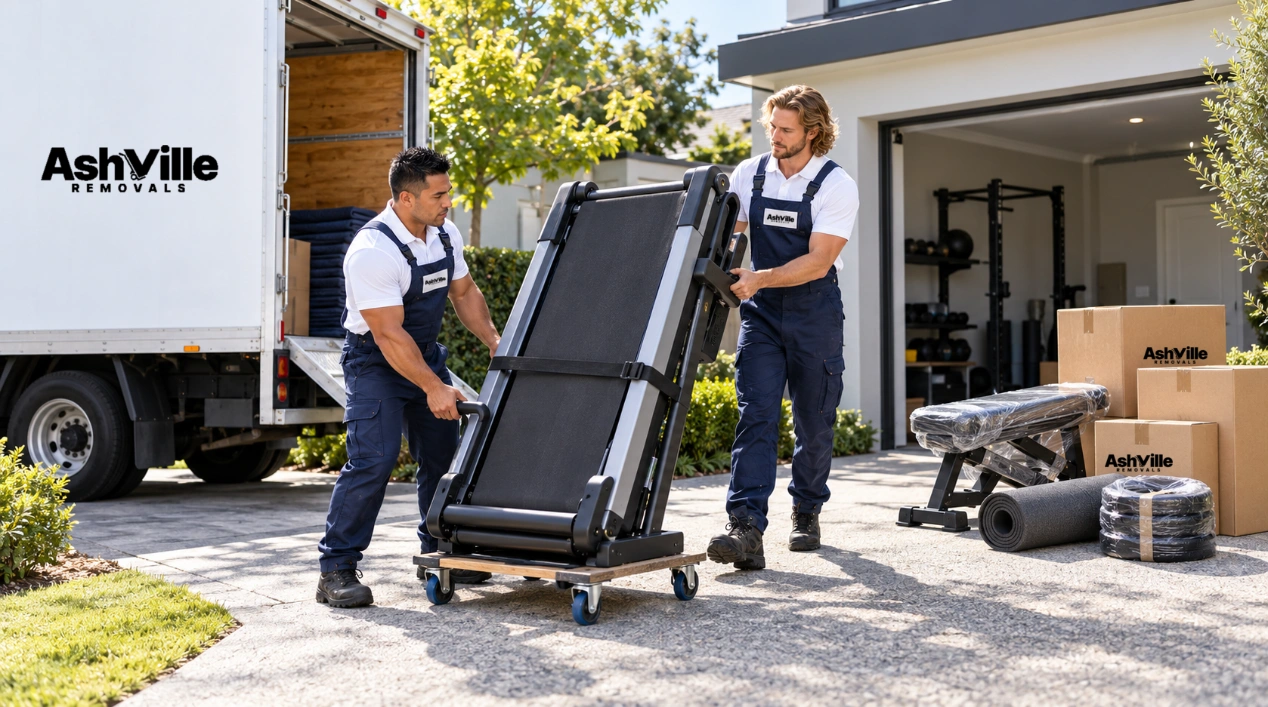
Home gyms are the item people most often decide to handle themselves, and they are also the item that most often ends with a damaged floor, a bent frame, or a trip to the hospital.
The reason is simple. Gym equipment does not look as heavy as it is. A rack is mostly air. A treadmill has wheels on it. A stack of plates sits neatly in a corner and gives no clue that it weighs more than a fridge. So people underestimate all three, lift badly, and find out the hard way.
Melbourne has a lot of this equipment sitting in garages and spare rooms across Point Cook, Tarneit, Caroline Springs, Werribee, and the outer east, and it all has to move eventually. This guide covers how to do it properly, item by item.
The Short Answer: How to Move Gym Equipment
Weigh or check the specifications first, dismantle everything that can be dismantled, unload plates and weight stacks before moving any frame, protect the floors at both ends, use a rated appliance trolley or furniture skates rather than lifting, and never move a treadmill, rack, or multi-station with fewer than two people.
Almost every gym equipment injury and every damaged floorboard comes from skipping one of those steps.
Start With the Weights, Not the Machines
Before anything else, work out what you are actually dealing with. Manufacturer specifications are on the model plate or the manual, and they are worth five minutes of searching because the numbers are usually higher than people guess.
As a rough guide:
- A motorized treadmill typically weighs between 90 kg and 140 kg
- A commercial-grade treadmill can exceed 180 kg
- A power rack or squat rack frame runs from around 80 kg to 200 kg depending on gauge
- A cable machine or functional trainer with a weight stack can exceed 250 kg fully loaded
- An Olympic barbell is 20 kg, and a full plate set commonly runs 150 kg to 300 kg
- A loaded adjustable dumbbell set can hit 100 kg on its own
Add it up honestly. Most home gyms in Melbourne come in somewhere between 400kg and 800kg all up. That is not a job for two friends and a ute, and it is one of the reasons we run a dedicated heavy item movers service with rated straps, pneumatic equipment, and custom dollies.
Can Removalists Move a Treadmill?
Yes. Professional removalists move treadmills routinely, and they carry the right equipment to do it: appliance trolleys rated well above the load, stair-climbing hand trucks, moving blankets, and rated straps. Flag the treadmill at the quote stage so the right crew size and gear are allocated to your job.
Where it goes wrong is when a treadmill is not mentioned until the morning of the move. A crew booked for a standard household load may not have a stair climbing trolley on the truck, and a 130kg machine coming down an internal staircase without one is not something anyone should improvise.
Tell your removalist at the quote stage. It costs nothing, and it means the equipment turns up with the truck.
Moving a Treadmill Step by Step
1. Unplug it and let it cool. Motors and belts hold heat. Give it half an hour before you handle it.
2. Check whether the deck folds. Most home treadmills fold at the deck hinge and lock in place. Folding roughly halves the footprint and makes the machine far easier to control through doorways. Engage the safety lock or transport pin, because an unlocked deck swinging down mid-carry is dangerous.
3. Remove the safety key and the console if it detaches. Consoles are the most damage-prone part of the machine and the most expensive to replace. Wrap it separately.
4. Do not rely on the transport wheels for anything except flat, hard surfaces. Those small wheels are designed for repositioning across a gym floor, not for carrying the machine’s full weight over thresholds, carpet, or driveways. They chip tiles and gouge timber.
5. Wrap the whole unit in moving blankets and secure with rubber straps over the blankets, never tape onto the frame or console.
6. Move it upright on a rated appliance trolley, strapped to the trolley, with one person on the trolley and one spotting. On stairs, use a stair climbing trolley and take one step at a time.
7. Do not lay it on its side to save space. Belt tension and deck alignment are set at the factory, and side loading can twist the frame enough to throw the belt off-center. If the manual specifically permits transport in another orientation, follow the manual. Otherwise, keep it upright.
8. Let it acclimatize before use. A machine that has come out of a cold truck into a warm room in a Melbourne winter should sit for a few hours before it is powered on, for the same reason electronics should.
How Do You Move a Squat Rack?
Dismantle it. A squat rack should be broken down into uprights, crossmembers, safety arms, J cups, and any attached pulley system, with every bolt bagged and labelled, then each component carried separately. Never attempt to move an assembled rack as a single unit.
An assembled power rack is tall, top-heavy, and rigid. It will not clear a standard door frame, it cannot be tilted safely, and if it goes over on a hard floor, it will do serious damage on the way down.
The process:
Photograph the assembly before you touch it, from several angles, including how the safety arms and J cups sit. Racks look symmetrical and are often not. This photo saves you an hour on reassembly.
Unload everything first. Plates off the storage pegs, barbell out of the J cups, and attachments removed. Nothing gets dismantled with weight still on it.
Work top down. Pull the top crossmembers first, then the pulley system if fitted, then the safety arms, and then separate the uprights last. Have a second person steadying the frame the whole time, because a rack becomes unstable as soon as the first crossmember comes off.
Bag and label every fastener by location. Rack bolts are usually a specific grade and length, and generic hardware store replacements are not a safe substitute on a piece of equipment that holds a loaded barbell over your head. One bag per joint, labelled, taped to the component it belongs to.
Carry uprights vertically, one person per upright where the weight allows, or two people for heavy gauge steel. Wrap the ends, because bare steel tube marks plasterboard and door frames instantly.
Reassemble to the manufacturer’s torque specification. Not hand-tight. If you do not have the manual, download it before the move, not after.
Moving Weight Plates and Dumbbells
This is where most back injuries happen, because plates feel manageable individually and the volume creeps up on you.
Never fill a standard moving box with plates. A carton with 60 kg of iron in it will fail at the seams, and if it does not fail, it is still unliftable. This is the most common single mistake in home gym relocation.
Use small heavy-duty cartons and cap them at 15 kg to 20 kg each. That is roughly two to four plates depending on size. It feels absurdly conservative until you are carrying the twentieth one.
Better still, use a trolley or pallet tree. If you have a pallet storage tree, moving the tree loaded on a rated trolley is safer than repackaging everything.
Wrap each plate or stack them with cardboard between. Bumper plates mark walls and each other. Cast iron plates chip and rust at chipped edges.
Keep bars and dumbbells separate. An Olympic bar travels wrapped and strapped along the truck wall, never loose. Loose bars roll, and a rolling 20 kg bar in a moving truck is a genuine hazard.
Load plates low and central in the truck. Weight distribution matters on a long drive. Any professional crew will do this without being asked.
The Rest of the Home Gym
Cable machines and functional trainers. Unload the weight stack completely before moving anything. Release cable tension and secure loose cables so they cannot whip or tangle. These almost always need full dismantling.
Benches. Adjustable benches usually break down into a frame and pads. Remove the pads and wrap them separately, because vinyl tears easily against bare steel.
Spin bikes and rowers. Most rowers separate into two sections at a central pin. Spin bikes are heavier than they look because of the flywheel, and the flywheel is what you must not knock, so wrap it well.
Rubber gym flooring. Roll it rather than folding it, and roll in the direction it was originally laid. Interlocking tiles stack flat and travel well. Take a photo of the layout before lifting.
Mirrors. Wall-mounted gym mirrors are large, thin, and unframed, which is close to the worst possible combination. These need proper crating rather than blankets.
Protecting Floors and Access at Both Ends
Melbourne home gyms live in garages, spare bedrooms, and converted rear rooms, which means the route out is rarely straightforward.
Lay floor protection along the full route before anything moves, not just at the doorway. Concrete garage floors are forgiving. Floating timber floors, tiles, and carpeted stairs are not.
Measure the doorways and the narrowest point of the route before the day. A dismantled rack upright will clear almost anything. A treadmill on a trolley will not clear a tight staircase turn if nobody has checked.
If your gym is in an apartment, the lift and loading dock booking matters even more than usual because of the number of individual trips involved. Our high-rise and apartment moves team arranges those bookings as part of the job.
And if you are still working out what else needs specialist handling on your move, our guide on how to prepare your home so removalists work faster covers what to flag at the quote stage.
Mistakes That Cost People Money
- Moving a rack assembled, which damages door frames and walls
- Boxing weight plates in standard cartons
- Using treadmill transport wheels on timber or tiled floors
- Losing rack hardware, which is often model specific
- Not photographing the assembly before dismantling
- Skipping floor protection through the middle of the route
- Attempting the whole gym with two people and no trolley
Frequently Asked Questions
Can removalists move a treadmill?
Yes. Professional removalists move treadmills as standard, using rated appliance trolleys, stair-climbing hand trucks, moving blankets, and straps. Fold and lock the deck, remove the safety key, and flag the treadmill at the quote stage so the right crew size and equipment are assigned to your booking.
How do you move a squat rack?
Dismantle it. Photograph the assembly first, remove all plates and attachments, then work top down: crossmembers, pulley system, safety arms, then the uprights. Bag and label every bolt by location and tape it to the component it came from. Carry uprights individually with the ends wrapped, and reassemble to the manufacturer’s torque specification.
How do you move weight plates safely?
Use small heavy-duty cartons and keep every box under 15 kg to 20 kg, which is roughly two to four plates. Never load plates into a standard moving box, because the seams will fail. A rated trolley or an existing plate tree is safer again, and plates should be loaded low and central in the truck.
Should I dismantle my home gym before the removalists arrive?
Wherever possible, yes, and it will reduce your time on an hourly booking. Racks, cable machines, and benches all need dismantling. If you would rather not, our furniture removalists can handle disassembly and reassembly, charged as crew time. See our pricing page for how hourly bookings are structured.
Is gym equipment covered by removalist insurance?
Ashville Removals includes full goods-in-transit insurance on every move, covering accidental damage during handling and transport. Declare high-value equipment such as commercial-grade treadmills or functional trainers at the quote stage so it is recorded on your booking.
Planning a Home Gym Relocation in Melbourne?
Tell us what is in your setup, and we will bring the right trolleys, straps, and crew. Written, itemized quote back within two hours, with no surprises on the day.
Get your free quote or call 0404 382 743. Heavy item movers and local removalists across 35+ Melbourne suburbs.