
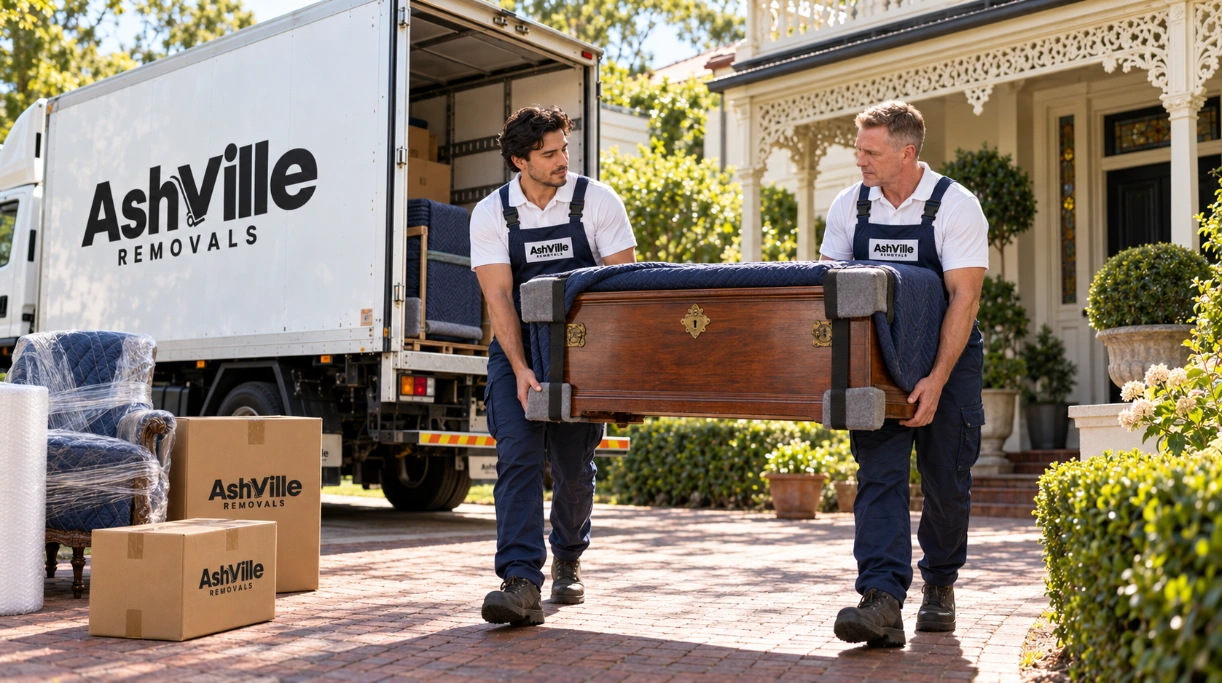
A modern sideboard that gets scratched in a move is annoying. A cedar chest your great-grandmother brought out from Ireland in 1911 is a different category of loss entirely — because there’s no replacement, no insurance payout that fixes it, and no second chance.
Melbourne homes hold a lot of this. The city’s Victorian and Federation housing stock came with the furniture to match, and the eastern and bayside suburbs in particular — Hawthorn, Camberwell, Kew, Brighton, Malvern — have properties where the pieces have moved between generations rather than between owners. Add the migration waves that brought furniture from Europe and the UK through the twentieth century, and you get a city with an unusual density of genuinely irreplaceable household items.
Antique furniture doesn’t behave like modern furniture in transit, and treating it the same way is where most damage starts. Here’s what actually changes.
Why Antique Furniture Is Different
The joinery moves. Pre-industrial furniture is held together by mortise and tenon joints, dovetails, and hide glue — not screws, dowels, and modern adhesives. Those joints were designed to flex with seasonal humidity, and they loosen with age. A piece that feels rock solid standing in a lounge room can rack and open up under sustained road vibration.
The finish is fragile. French polish, shellac, and hand-rubbed wax finishes are soft, spirit-soluble, and heat-sensitive. Modern polyurethane shrugs off a plastic wrap sitting against it for six hours. Shellac can bloom, mark, or lift.
The materials have aged. Century-old timber is drier and more brittle than new timber. Veneers lift. Glue blocks let go. Old glass — in cabinet doors, mirrors, and clock faces — is thinner and more prone to shattering than modern float glass.
The value is often invisible. Original hardware, an intact patina, and an unrestored surface can represent most of a piece’s worth. A well-meaning polish before the move can strip decades of value in an afternoon.
How Do You Move Antique Furniture Safely?
The short version: document and appraise before you touch anything, remove and separately pack all glass, marble, and loose components, wrap in acid-free tissue or unbleached cotton first and moving blankets second — never plastic directly against the finish — crate anything genuinely high-value, and transport upright and immobilised with the piece’s weight resting on its original bearing points.
The detail matters, so here’s the process step by step.
Step 1: Document and Value Before the Move
Photograph everything in detail. Every piece, from multiple angles, plus close-ups of existing damage, maker’s marks, labels, and hardware. Photograph in good natural light. This is your condition record and it takes half an hour.
Get a written valuation for significant pieces. For anything you believe is worth more than a few thousand dollars, a current written appraisal from a qualified valuer is essential. It’s the difference between a claim being assessed on evidence and being assessed on your recollection. Melbourne has an established antiques trade and finding a valuer is straightforward.
Note existing damage explicitly. Old repairs, previous cracks, loose joints, and veneer lifts. Documenting them protects both you and your removalist from disputes about what happened when.
Check for loose or removable elements. Marble tops, glass shelves, cabinet doors, drawer stops, finials, and castors. Anything that lifts out or unscrews should travel separately.
Step 2: Prepare the Piece
Empty completely. Every drawer, every shelf, every cabinet. Weight inside an aged carcass is what pulls joints apart.
Don’t polish or clean before the move. Resist this entirely. Patina is value, and a fresh coat of anything can react with wrapping materials. Clean after you arrive, if at all.
Remove drawers where the runners are worn, and wrap them separately. Otherwise secure them closed with soft cotton tape — never packing tape on the timber.
Secure doors with padded cotton tape, not tape onto the surface, and not by tying rope around the whole piece, which can crush mouldings.
Take marble tops off and transport them upright, on edge, wrapped and crated. Marble is far weaker in the middle than at the edges and cracks under its own weight if carried flat — the same principle that governs flat panel TVs.
Remove or immobilise glass. Glazed cabinet doors, mirror panels, and clock faces should come out where they’re designed to. Where they can’t, tape a protective cardboard sheet over the glass so a crack doesn’t travel.
Photograph and bag every fitting. Original hardware — brass handles, escutcheons, hinges — is often the hardest thing to replace. Bag and label each piece’s hardware separately.
Step 3: Wrapping and Protecting Antiques in Transit
The order of materials matters more than the quantity.
Layer one: acid-free tissue or unbleached cotton. Directly against the finish. Acid-free tissue for delicate and polished surfaces, clean cotton sheeting for larger pieces. This layer exists purely to keep everything else off the finish.
Layer two: moving blankets. Full coverage, with doubled padding on corners, feet, and any protruding carving or moulding. Corners take almost every impact.
Layer three: securing. Rubber straps or stretch wrap over the blankets only. Stretch wrap must never contact the timber — it traps moisture, and on shellac and French polish it can bond to the surface. This is the mistake that ruins more antique finishes than any drop.
Custom crating for the highest-value items. For museum-grade pieces, delicate carved work, gilded frames, or anything where a claim would never make you whole, a purpose-built timber crate with foam bracing is the only genuinely safe answer. Our artwork and antique movers build custom crates and catalogue each item before packing.
Step 4: Loading and the Melbourne Climate Question
Load antiques last and unload them first. Less time in the truck, and no risk of anything being stacked on them.
Upright, on original bearing points. A piece should carry its weight the way it was designed to. Never invert a chair or table to save space — the legs and joints were never engineered for it.
Immobilise, don’t just secure. Strapped against a padded truck wall with no room to shift. Movement over a long drive is what works joints loose.
Never stack anything on an antique. Not a box, not a blanket, not a lamp.
Mind the temperature. This is the Melbourne-specific risk people miss. A stationary truck on a 38-degree January day reaches temperatures that soften hide glue and shellac. In July, a piece coming out of a heated home into a cold truck and back into a heated house goes through a humidity swing that can open joints and lift veneer. Two practical responses: move antiques in the milder months where you have the choice, and let pieces acclimatise in their new room for 24–48 hours before you clean, polish, or reassemble anything.
Plan the access route in advance. Melbourne’s period homes are exactly the properties where antiques live, and they’re also the ones with narrow hallways, tight staircase turns, and doorways built to different dimensions. Measure the piece and measure the doorway before moving day, not during. Our local removalists survey access as part of the quote for exactly this reason.
Are Antiques Covered by Removalist Insurance?
Partly — and this is where owners most often get caught out.
Standard goods-in-transit insurance covers standard household items. It’s included on every Ashville Removals booking and covers accidental damage during handling and transport. For ordinary furniture, that’s complete cover.
High-value items usually need to be declared separately. Most goods-in-transit policies across the industry apply a per-item limit. If a piece is worth more than that limit and you haven’t declared it, you are covered up to the limit and no further. Declaring a valuable item costs nothing and takes one line on the booking form.
A current written valuation is what makes a claim work. Without one, an insurer assesses on whatever evidence exists — which is usually your photographs and your word.
Some categories need specialist cover. Museum-grade antiques, significant fine art, and rare collectables may sit outside a standard transit policy entirely and require dedicated fine art insurance. A specialist antiques insurer or your existing home and contents insurer can advise, and it’s worth the call.
Ask three questions before you book any removalist: what is the per-item limit, what does the excess look like on a high-value claim, and can I see the policy documentation before confirming? Any reputable Melbourne removalist will answer all three without hesitation. We provide full policy documentation on request before your booking is confirmed — details are on our pricing page.
What Not to Do
- Don’t move a large antique yourself to save money. The saving is small; the risk is total. If cost is the driver, our budget moving guide has safer places to cut.
- Don’t use plastic wrap against timber. Trapped moisture and finish bonding.
- Don’t tape anything directly to a finished surface.
- Don’t disassemble old furniture unless you know how it comes apart. Modern flat-pack logic doesn’t apply, and a forced joint doesn’t go back.
- Don’t put antiques in storage without climate control. Melbourne’s temperature and humidity range is wide enough to do real damage over months.
- Don’t leave the fragile items for the end of the day. Tired crews, rushed decisions.
Frequently Asked Questions
How do you move antique furniture safely? Document and photograph the piece first, empty it completely, remove all glass, marble, and loose components to travel separately, then wrap in acid-free tissue or cotton against the finish and moving blankets over the top. Secure with straps over the blankets only — never plastic or tape against the timber. Load upright, immobilised, and last on the truck.
Are antiques covered by removalist insurance? Standard goods-in-transit insurance covers accidental damage to household items and is included on every Ashville Removals move, but most policies apply a per-item limit. High-value antiques should be declared at quote stage and supported by a current written valuation. Museum-grade pieces and significant fine art may need specialist fine art cover in addition.
Should I use plastic wrap on antique furniture? No — not against the surface. Plastic traps moisture and can bond to shellac and French polish finishes. Wrap in acid-free tissue or unbleached cotton first, then moving blankets, and only then apply stretch wrap or straps over the blankets.
Can antique furniture be transported on its side? No. Antique pieces should always travel upright, resting on the bearing points they were designed for. Aged joinery and hide glue joints are not engineered to carry load in other orientations, and inverting or laying a piece on its side is a common cause of loosened joints and cracked frames.
What’s the safest time of year to move antiques in Melbourne? Autumn and spring, when temperature and humidity are most stable. Summer heat in a stationary truck can soften old glue and finishes, and winter creates sharp humidity swings between heated homes and cold vehicles. If your date is fixed, ask your removalist to load antiques last and unload them first — and see our month-by-month guide to the best time to move house in Melbourne.
Trusted Antique Movers in Melbourne
Heirloom furniture, fine art, and high-value collectables are catalogued, photographed, and wrapped or crated to specification before they go anywhere near the truck. Tell us what you’re moving and we’ll quote the right crew and materials.
Get your free quote or call 0404 382 743. Specialist artwork and antique movers serving 35+ Melbourne suburbs since 2013.