
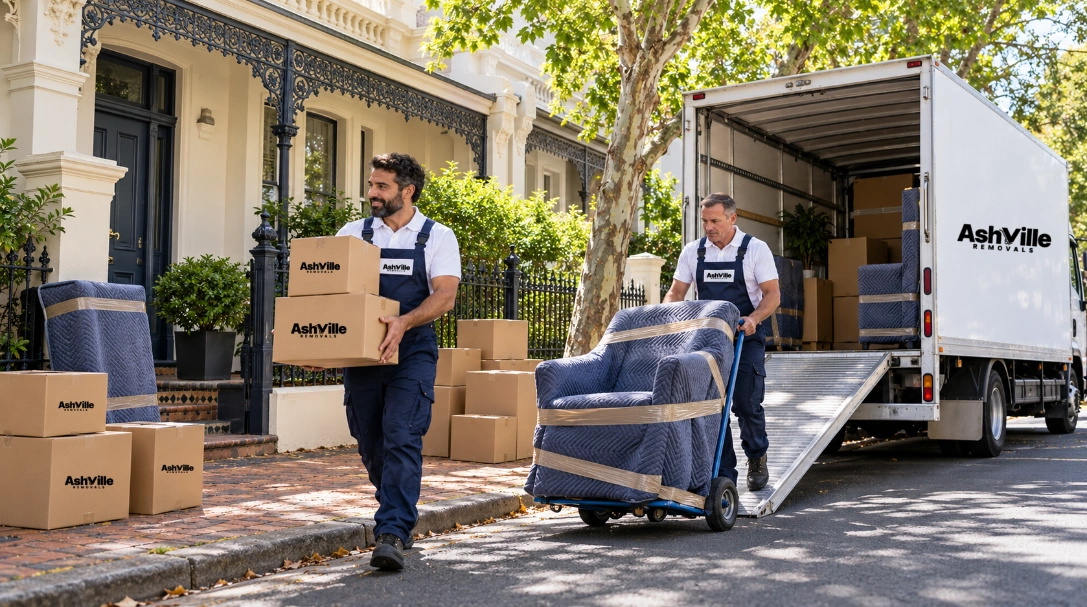
Moving day feels chaotic mostly because it’s unfamiliar. You’ve packed for weeks, you know what’s in the boxes, and then a truck arrives with three strangers and you realise you have no idea what’s supposed to happen next or how long any of it takes.
It’s actually a fairly predictable day. Professional removalists run to a rhythm, and once you know what that rhythm is, your job becomes straightforward: stay ahead of it, make decisions quickly, and don’t get in the way of the loading path.
This is what a typical Melbourne moving day looks like from the inside — hour by hour, from the alarm going off to the last box coming off the truck.
(If you want this as a tickable list rather than a narrative, use our moving day checklist from 6am to handover alongside it.)
How Long Does Moving Day Take?
A studio or one bedroom move takes 2–3 hours. A two to three bedroom home takes 3–6 hours. A four bedroom or larger home takes 6–9 hours. These are door-to-door figures including travel between addresses.
Access is what shifts these numbers most. Stairs, long carries from the truck to the door, high-rise lift queues, and difficult parking each add time — and on an hourly booking, time is the bill. Our published Melbourne removalist pricing shows how crew size and hours combine for each home size.
6:00am — Get Up Before the Truck Does
Set your alarm earlier than feels reasonable. The hour before the crew arrives is worth three hours later in the day.
Shower first — the hot water gets disconnected and you won’t get another chance until tonight. Eat something substantial. This is a physical day and you will not stop for a proper meal.
Charge your phone to 100% and put the charger somewhere you can find it, not in a box.
6:30am — The Final Sweep
Walk the house with fresh eyes and check the places people forget: the dishwasher, the oven, the linen press, behind every door, the top shelf of every wardrobe, the roof cavity, the letterbox, the garden shed, and the meter box.
Seal any last boxes. Every carton should be taped top and bottom with the destination room written on two sides and the top.
Check the fridge is fully defrosted and dry. If it isn’t, it will leak through the truck.
7:00am — Secure the Parking
This is the highest-value 20 minutes of your entire moving day. Every extra metre between the truck and your front door gets multiplied across a hundred trips, and on a narrow street in Fitzroy, Carlton, Richmond, or Brunswick, a good park can save an hour of paid crew time.
Park your own car in the spot overnight and move it when the truck arrives, or set out bins and cones. If you applied for a council parking dispensation permit — needed on clearways and metered streets in the City of Melbourne, Yarra, Port Phillip, and Stonnington — display it visibly now.
If you’re in an apartment building, confirm the goods lift booking and loading dock slot with the concierge or building manager this morning. Our high-rise and apartment moves team arranges these in advance, but a morning confirmation costs nothing.
7:30am — Clear the Path and Send the Family Out
Move rugs, pot plants, shoe racks, bikes, and bins out of hallways, stairwells, and the front path. Prop open the doors that need to stay open.
Get pets and small children offsite now, not at 9am when the crew is carrying a wardrobe through the hallway. Doors are propped open all day and the loading path is in constant use — it isn’t safe, and it slows everyone down.
Pack your essentials bag if you haven’t already: kettle, mugs, teabags, phone chargers, toilet paper, hand soap, a towel each, medications, a basic toolkit, and a change of clothes. Passports, jewellery, cash, laptops, and important documents stay with you personally, in your car — not on the truck.
8:00am — The Crew Arrives
Here’s what happens on moving day when the removalists turn up, and it’s more structured than most people expect.
The walkthrough (10–15 minutes). The crew leader walks the property with you. They’re assessing access, identifying heavy and fragile items, mapping the loading path, and confirming what’s going and what’s staying. Use this window properly — say what’s fragile, what’s staying, what needs to come off the truck first at the other end.
Protection goes down. Floor runners, door jamb protectors, and corner guards. In a Melbourne winter, expect them to lay extra at the entry.
Wrapping begins. Furniture is blanket-wrapped and strapped before it moves. Watching someone wrap a sofa for five minutes feels slow. It isn’t — an unwrapped item that gets damaged costs far more time than the wrapping did.
8:30am to 11:00am — The Load
The crew loads in a deliberate order: large furniture first to form the structural base of the load, then boxes stacked into the gaps, then fragile and awkward items last so they come off first.
Your job during this window is to be present, decisive, and out of the loading path. The single biggest cause of a stalled move is a crew standing in a hallway waiting for someone to answer a question. Stay reachable, answer quickly, and don’t hover in the doorway.
Don’t try to help carry. It’s insured work, the crew has a system, and an extra pair of untrained hands in a stairwell genuinely slows things down.
Do offer water. It’s a long day, and it’s appreciated.
Specialist items—pianos, safes, pool tables, antiques, and artwork—are handled separately with dedicated equipment. If you’ve got these, they should have been flagged at the quote stage so the right gear is on the truck. That’s what our piano movers, heavy item movers, and artwork and antique movers teams are for.
11:00am — Final Check and Departure
Before the truck leaves, walk the entire property one more time with the crew leader. Every room, every cupboard, the garage, the shed, the balcony.
Take meter readings for electricity, gas, and water, and photograph them. Photograph each empty room for your bond or handover record.